Friday, December 13, 2013

50 Random Facts I've Learned About Med School Life

1- The meaning of the word gunner. A gunner is basically an overly ambitious and competitive medical student who is always ahead of everyone else. It's like your typical nerd times 1000.

2- The hardest studying you have ever done in your life is still not as hard as you will study in medical school.

3-Caffeine withdrawal gives you awful headaches.

4- Some people think women who go to medical school are actually nursing students.

5- Physical therapy students will be better at interviewing patients than medical students will.

6- Most doctor's have an unconscious tendency to be less friendly towards their obese patients because they cause their own diseases.

7- Cadaver lab is cool on the first day; then it gets old REALLY fast.

8- Having faculty members that truly care about their students makes a huge difference.

9- Most  gunners don't identify themselves as such.

10- The class' averages on tests will be ridiculously high.

11- Going to class is considered a study break.

12- You will never look or feel more badass than when you wear your white coat.

13- Showing cops your medical school ID (or white coat) can get you out of speeding tickets (unofficially).

14- Plexuses suck.

15- It's really hard for family and friends to understand how busy we really are.

16- Human flesh looks like steak.

17- Most patients will truly trust your advise as a student even though you are not an official doctor yet.

18- Speaking Spanish is a huge asset in the medical field.

19- You have the power to start making a difference as a student. Whether it is through a research project, a mission trip, saving a  life on your free time, or through an organization, making an impact starts now.

20- Two weeks in regular time equals a month in med school time.

21- You will have REALLY LONG DAYS every single day.

22- There will be a fair portion of your classmates that are already married or engaged.

25- Starting med school in your thirties and/or being pregnant during med school is not uncommon.

26- The alternate definition of "pimping": when a med student gets singled out to answer questions by a resident or attending. Depending on the extent of your knowledge you can excel or be humiliated.

27-Fourth year is the easiest one. It's kind of a scam for students to pay tuition to go interview for jobs around the country.

28- In a second year exam, you will be easily tested in at least 90 hours worth of material.

29- One-on-One teaching  is the best learning method.

30-Physician professors are the best lecturers.

31- Your one official free day will be the test day after the test is done.It's wonderful.

32- Comparing yourself to other people's grades and/or study methods is the best way to drive yourself crazy.

33- Third year students are like myths...everybody has heard of them but no one has actually seen one.

34-Neuro block is an entirely different language.

35- First Aid USMLE Step 1 is the medical school bible.

36- Whether you have a life or not in medical school, is actually your choice.

37- There is never a "best time" to get married or have kids in this career. Just go with life as it happens.

38- It will either be raining or really cold on your free days. Murfy's Law.

39-Your circle of friends will change as school progresses.

40-You will forget what it feels like to be normal.

41- 8 hours of studying is not as much as it sounds.

42-Pushing through being miserable is the hardest part.

43- Even though you constantly feel stupid, you actually know more than you give credit for.

44- There are plenty of people, and plenty of sources with tons of advice about board study prep. One size does not fit all for USMLE prep. Find what works for you.

45- Having a mentor you look up to helps you keep motivated.

46- Non-traditional students have a tough time adapting because they've actually had a life outside the library.

47- The lady at Starbucks will know you by name. She'll notice your hair cut when your friends don't.

48- Friends are high yield.

49-Good enough is good enough.

50-You are stronger than you think you are.


Sunday, July 21, 2013

Time Management in Medical School

     It has been about 10 months since my last post to this blog. I intended to keep it going all year around, thinking I would make time to write about my first year of medical school; keeping my memories fresh for you guys to enjoy as I went along. However, here I am on the eve of my second year with memories going stale, forcing  words out of my mind, and wondering how I can enlighten you with my experience.
     You might be guessing the reason I have not written in 10 months because I was busy studying. Well, yes and no. The first year of medical school provided more free time than I thought I would have. I thought I would be studying day in and day out as part of a nerd herd that slowly becomes less human with every test. Don't get me wrong. you will find people like that in medical school. But becoming one of them is a choice. A choice I decided not to make.
    It is possible to have a life and do med school at the same time. It really depends on the kind of person you are, however. If studying day in and day out is not a problem for you, the keep doing what works for you. If you are the kind of person that needs to balance all aspects of your life: physical, mental, family, spiritual, love life, then time management will be golden for you.
        Set up a designated time to do the things that are important to you, and then accommodate your study schedule around them. Leave room for freedom and adaption in your schedule. Find out what works for you and organize yourself accordingly.
       I, for example, like to go running at around 5 or 6pm several times a week. So I fit my studying before working out, this way running came as a good decompressing break. Running tended to turn into a 3 hour break sometimes, considering I have to shower, cook, eat, and do dishes afterward. By 9pm I would be  too tired and/or unmotivated to study. Any studying I did after this time was unproductive. So I tried to change it up to see what worked best. I tried working out later at night. But then it felt like I was not enjoying daylight or it felt heavier because my stomach still had dinner inside ( I usually run before eating).
          Then I tried working out in the mornings before my 8am class. This meant waking up earlier and then by noon I already needed a nap. Where there's a will, there's a way. Running is important for both my mental and physical health. Not doing it because I had to study was simply not an option. So instead I decided to run whenever my mind needed a break the most, whenever that may be, so the benefits would outweigh the costs.
        I know some of my classmates have done similar things. For some of them, Church on Sunday is a sacred time in their week and will be prioritized regardless of whether there is a test on Monday or not. One of my married classmates never studies on Friday night, because that is her date night with her husband.Another fiend likes to study while tanning by the pool. Some of my friends skip class entirely (luxury due to recorded lectures) to do everything they have to do in their day before they start studying. Many people take several days off after a test day, to recover and re-balance. People also get involved in many organizations and clubs available in medical school and then dedicate their free time to meetings, events, and activities related to these clubs.
      You might be wondering, if there is such a thing as free time in med school, why did I not write? Well I was too mentally drained during this time and I wanted to use it to do something fun and relaxing, instead of exerting my brain some more. An advice that I recommend anyone in this field to do. It's important for me to feel like I am still a normal person and that I can still hold a conversation with someone that doesn't know what ptosis means. That is why this summer I have done nothing but chill by the pool, hang out with my friends, work on a research project, and enjoy myself. When second year begins the course load will be a lot heavier and the mental demand more taxing. But this just gives me more reason to prioritize balance.

Wednesday, September 19, 2012

Studying for Med School Exams

      During my med school orientation one of the deans mentioned that the information you study in undergrad is like drinking water from a water fountain, but in med school, it's like drinking water from a fire hydrant. At the moment it seemed a little dramatic but after having taken two exams in medical school, I know he was right. The material itself is not intellectually harder, there is just A LOT of it. Every two weeks or so we get tested on 25-30 hours of lecture, excluding anatomy (from the lecture hour count, not from the test). Exams are multiple choice, two questions per lecture hour. Being a science major was of MUCH help. A lot of the material they start with is advanced genetics and biochemistry with clinical correlations, so if you have a good foundation of those, you shouldn't be too overwhelmed. Professors will not break down or dumb down the material piece by piece for everyone to digest peacefully. They have 50mins of lecture and if you didn't get it, go to their office hours or ask a friend for help. Professor's are not rude regarding questions, but their lecture is being recorded and they only have so much time to get it all into the tape. Plus, this is the big leagues now. People are good about learning things on their own without a professor.
      Even though I have always had good study habits, after the first exam I had to make some adjustments to adapt. Re-listening to the lectures, and going over my notes a few times was not enough. There is so much information that by the time you finish going over all of it, the material from the first few lectures is already slipping out. I found ways to organize information so I could process and understand it faster: flow charts, YouTube videos, pictures, tables, outlines, dirty mnemonics, you name it, I've done it. Group study was also of tremendous help. People find different ways to teach each other important material, and once you talk about a certain topic, you will not forget it. My class is a great team when it comes to helping each other. We have a Sharepoint account where we upload notes on unrecorded presentations, practice quizzes, summarized anatomy, etc. We also have a Facebook page where we post links to helpful videos and websites. My peers have been my teachers as much as my professors have, or more.
         A week before the exam, the  only balance you will have in your life is the one between food, sleep, and studying. Nothing else matters. Dishes? Pile them on the dishwasher. Hamper? Overflowed. Bathroom? Dirty. Phone rings? Ten missed calls; from mom. Again, having a science major is a good prep for the type of life style you will find in med school. Studying in a group also helps you keep your sanity. People tend to make jokes or just start a conversation and that time can loosen up the tension and help you keep going. I have never been able to study at home for long focused periods of time, so I basically spent my weekend in school. As long as I have my student ID  I can go in any time I want. They have a lounge there with fridges and microwaves, so I went prepared with lunch, dinner, snacks, and coffee for the day. Saturday I went in at 8am and left at 10pm. Classmates that came in later, say noon, stayed up until 3am. Of course, we took breaks. Usually to eat, take a small walk, talk to other people studying at school, but anything more than one hour is a luxury we cannot afford.
         In an optimal study plan, the weekend is just for memorizing and developing a good grasp of the information. By this time you should have finished re-listening to lectures and writing notes. For both of my exams I woke up feeling confident about them. But when I took the test I felt like none of the important information I had studied was there, and I struggled to remember little details I knew I had studied but was not 100% sure  I remembered correctly. Talking about the test afterwards makes it all worse because everyone has different answers and they all have good arguments for each of them. It seems like any answer would be possible and the only definitive factor is what the professor says is right, because the professor says it's right. Even though, I felt awful after both exams, I did better than I expected for both, scoring in the high B range. The average was also in the high B range, but fortunately for me USF has a pass/fail policy and the average does not factor into my grade unless everyone has scored poorly.
         The day after an exam is my off day, and I use to catch up with life. Get everything in order and call everyone I haven't talked to in days. You just get one day though, because even though you just took a test you already have more information to study before it piles up. It is a stressful process, however, the nerd in all med students secretly enjoys what they are learning. But I would advise to anyone who is not passionate about medicine to stay away from it. It is the passion that keeps you going through all of it, knowing that this information could potentially save a patient's life someday. If you are still a pre-med, try to get yourself out of  a path in medicine as much as you can, and if you can't, then you know it's for you.

Tuesday, September 4, 2012

The White Coat Ceremony

    On August 17, 2012, 163 first year medical students of the largest incoming M.D. class ever at USF MCOM, received a white coat. It was a two-hour ceremony on a rainy afternoon. We still had class from 8am-12pm, but many students skipped to receive the family members that would attend the ceremony. My family is a 3-hour plane ride away, so they could not be present, but my best friend of 11 years now came to see me, so it was as if I really had family there after all. All the excitement and commotion usually present at graduations was there, except we were starting a journey instead of ending it. Dressed in our business-best, ready for the marathon of camera flashes that would come our way, we marched in the ballroom behind a man playing bag pipes, in our respective alphabetical order. We sat facing the crowd, with gleaming faces; in the melee it was hard to tell who was bursting more with pride, the students or the families.
    Dr. Stephen Klasko, CEO of USF Health and dean of the Morsani College of Medicine, proceeded to give a speech about the meaning of the white coat. Without the coat, he is a regular guy, but as soon as he puts it on, people look at him differently. They show respect and trust because he is representing something more than himself. Receiving the white coat marks the start of our professional life. It still blew my mind to think that the 163 students around me WOULD be doctors one day. It was a certainty and not a possibility anymore. 
        Dr. Brownlee, professor of medicine and 2012 recipient of the Leonard Tow Humanism in Medicine Award, spoke about the dangers the white coat can bring. Illusions of power that interfere with patient care and about the importance of taking the white coat off every once in a while to just be human.  Simple things like saying "I'm sorry" to a patient can be the most humanistic and hardest thing to do for a physician some times. Alicia Billington, a third year medical student at USF MCOM and president of the Student Council, spoke about humanism in her experiences as a student. She encountered a three-car crash on the highway once and stopped to help the victims while an ambulance arrived. At that point in her academic life, however, the most she could do was give CPR if a victim's heart stopped, and there was not much she could do without equipment to aid her. She spoke about how she sometimes felt she had been clinically right, but she still felt she had failed the patient. “Please don’t forget to smile and touch your patients. Don’t for forget to be human,” Alicia said. I surprisingly enjoyed each of the speeches. I expected them to be monotonous and boring but they held everyone's attention the entire time. l also loved how they emphasized the advantages and disadvantages of the white coat; like they're about to raise you on a pedestal, but they ask you to remember to step down and level with everyone else at the same time.
       Then the official coating began. Members of the faculty coated the students as we walked to the stage in groups of four. The coat had the school's seal on it, as well as a gold pin in the collar that read "Humanism in medicine". Theoretically, it should have had our names embroidered on them, but the order was not done on time and we had to return the coats after the ceremony was over.When everyone had been coated, the class was presented. The audience's exhilaration swelled our chests even more. We proceeded to pledge the Oath of Commitment, USF's modified version of the Oath of Hippocrates. In it vowed to practice medicine honorably and morally; to improve healthcare in our community; and to recognize when our abilities reach their limits, and seek assistance when that happens. We also made a commitment to life-long learning and respect of patient confidentiality.
       In a way, the White Coat Ceremony felt like a marriage ritual. Even though we get a coat instead of a ring, we still promise to practice it faithfully for as long as we shall live, and it still marks first day of the rest of our lives.

Short Video of Ceremony-Tampa Bay Times

Article by USF Health on WCC: http://hscweb3.hsc.usf.edu/blog/2012/08/18/a-commitment-to-humanity-in-medicine/#.UDPfQrGgvIQ.facebook 


Friday, August 10, 2012

Medical School Week#1


       Even though it's been a week already, it's still surreal to think that I'm in medical school. Getting into med school is a long term goal and you work hard on it for so long that it almost seems unreachable. There are 120 core M.D. students in my class, plus 40 in a special M.D. program called SELECT. Surrounded by 160 people packed in an auditorium, and ALL of us becoming doctors, makes me realize how blessed I really am. I knew a few people already because we had done undergrad together. Familiar faces on a first day full of new ones definitely enhance the experience.
        The first week was nothing like I expected it to be. I thought I would have homework and quizzes by the second day at least; and that most of my classmates would be know-it-all-snobs or anti-social nerds. I'm glad to report  neither was true. Although most of my classmates have extremely different life stories, when talking to them I can tell we have all been carefully handpicked and polished from a thousand others because of similar traits. Everyone seemed very well-rounded, approachable, with a good sense of humor, good social skills, and of course, smart (No more awkward silences after making a science-joke!). 
         At USF COM, the second years have a peer advisory committee and they prepared a week's worth of activities for us to socialize and meet each other. Starting with a park mixer the Saturday before the first day of class, where we had a barbecue, played football, and other ice-breaking games. At first it was a little awkward to randomly introduce myself to different people over and over, but everyone else was in the same boat, and I soon got used to it.Sunday night the class was split into groups of 7-10 for a welcome dinner with 3-4 second years (MS2s). The MS2s were full of advise and very supporting toward the year ahead. In my group we went to a Mexican restaurant and clicked so well, that we were there for 3.5 hours. The MS2s were so normal and fun that suddenly the first year was not so intimidating. No one was left out of the conversation, sure at times there were about three different conversations going on, but we did take the time to get to know each other as a group. Monday night (after the first school day!) we had trivia night at a pub. Yes, you read right, med students went drinking :O hahaha. I met more people there but by this third event I began to see that the same group of people were the ones going out to have fun. Not that the rest don't like fun, but there was a fair amount of classmates that were married, had kids, or were engaged, and as such they had pressing priorities.
          Tuesday night the American Medical Association (AMA) at our school had a social at restaurant-bar. I met a lot more people in the social and saw their true fun colors when the official meeting was over, the lights went out and the music began. The first day everyone seemed so serious and professional in their business clothes and med school mode, but that impression melted away when we all sang "Call me, maybe", "Titanium", and "Wild one", while busting out crazy moves in the dance floor. If anything that's when I really started to think I was dreaming and not in med school at all. Wednesday night, we went to a local baseball game, Rays vs. Toronto. While I don't follow any sports, I went anyway for the sake of having that experience with my classmates. I barely payed any attention to the game, but I did learn a few things about teams and plays from everyone else there. At this point people were naturally falling into groups of those they had the most in common with. Finally, Thursday night, we went to a small theme park Grand Prix to go-kart race and play miniature golf. There was free pizza and chicken wings as well as really cheap beer. I had a lot of fun during this first week, but all MS2s say, the first year is the "easiest" relative to the other years and the time to enjoy yourself is now. I room with an MS2 ad while I've been going out every night she has been studying non-stop, taking breaks only to eat or drink coffee.
          Academically speaking this week has been very orientation and mostly an introduction to our courses. We had lectures on the health care system and how Obamacare will change insurance. We also had several lectures discussing the importance of  professionalism, ethics, and cultural competence. Now that we are medical students we represent the health care system as well as our career and who we are anywhere we go. We were warned about how things we post online and how we conduct ourselves in our social time can affect our careers. We also discussed the importance of team work in health care. As doctors we work with pharmacists, physical therapists, nurses, and its important to value all of the members without demeaning either of them. Our first year lectures are shared with physical therapist students so we will be practicing this inter-professionalism starting now.
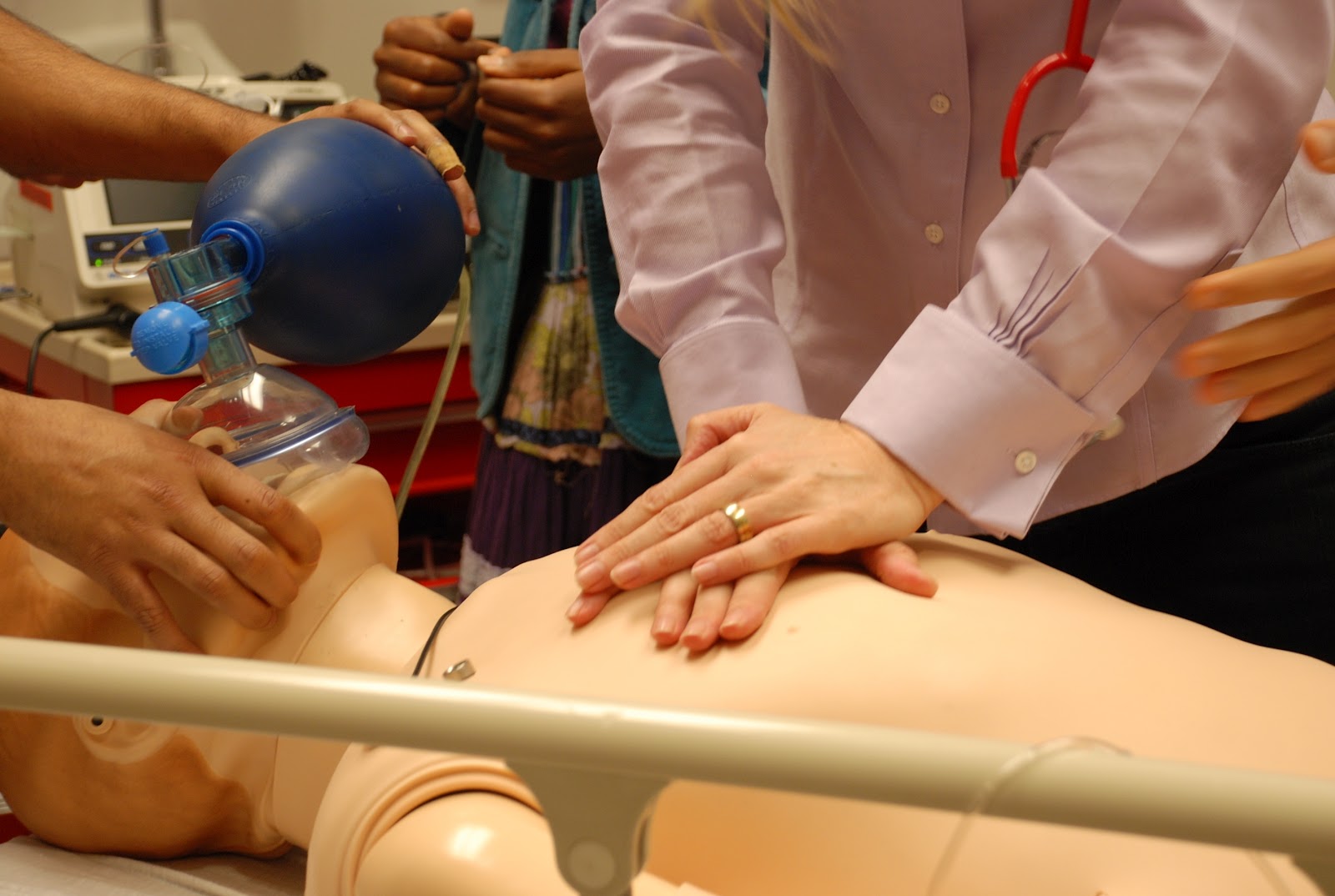
            Our curriculum runs by body "systems". Our first course is the musculoskeletal system and it is about 8 weeks long. In those 8 weeks we will learn everything related to that system from development, anatomy, diseases, etc. After that time we take a test and move on to the second system and so forth. Monday, Wednesday, and Fridays will be our science days while Tuesday and Thursdays we have ethics, humanities and Doctoring. In doctoring we are divided into smaller groups directed by an attending preceptor and an MS4, and we learn communication and history taking skills. Already in our first week we paired in twos and had to take the medical history of a standardized patient (actor) in a simulated clinical environment. The patients are not allowed to voluntarily give information just clues here and there, and as "doctors" we have to dig deeper on everything they say. Patients don't usually relate their symptoms but think of them as separate issues, so they may not mention other symptoms because they don't think it relevant to their pressing concern. In addition to Doctoring we also got CPR and AED certification this week. It was a four hour training in one and two-rescuer methods on adults and children.
          The week ended with a student organization fair. The COM had various interest groups for any occupations that students were interested specializing in their residency. National medical organizations were also present such as the AMA, Medical Students for Choice, Project World Health, AMSA, and many more. All of this offer volunteering opportunities, international mission trips and national conferences. Membership in any of this can enhance your residency application and also provide you with hours for the 80/hr volunteering requirement in the first two years.
           The science courses will be starting next week. Subscribe with your gmail account to follow up on how the med school heat builds. Hope you enjoyed this post :)
       

Wednesday, July 25, 2012

Interview Day III: What Happens On The Big Day

     When you finally have an interview scheduled the first thing you should do is ask around people who have also been interviewed at that schools or try to find out from the students themselves. While all interviews have a similar outline, few things vary her and there, and knowing ahead of time can help you. Usually the interview will take a whole day; not because they are questioning you for eight hours but because they take advantage that you are there to give you a tour of their school, educate you on their curriculum and give you a chance to talk to med school students attending that school.You will be e-mailed all the necessary information from parking arrangements to places you can stay for the night before the big day.  BE ON TIME! If you are driving in, you should scan the place the day before to avoid getting lost , know where you need to park etc. In some schools med students host candidates overnight. They can guide you through the school, give you tips for the interview and their insight of their experience in that school. 
      Dress code: Suit up! 

Guys this means get a haircut, shave, remove piercings, hide tattoos, nice shoes, belt, tie, jacket. Aim to look like Bruce Wayne, or your favorite wealthy superhero. Girls: no cleavage, skirts (if you decide on a skirt suit) at or below the knee, hide tattoos and crazy piercings as well, no funky nail or hair colors. This is not the time to wear heels you can't walk in either. Your make-up should be enough to look fresh and radiant but not too much that you look like you are going to the club. I would not suggest wearing eye shadow or lipstick, but if you have to, stick to neutral colors. You clothes should be tight enough to know you are a woman but loose enough to know you are a lady. The body language you project throughout the day should match your appropriate dress code. No slouching, yawning, crossing arms or looking bored. Avoid sarcastic comments and stereotypical jokes, if you can.
      NO CELLPHONES. They will tell you this also in the scheduling e-mail. It is rude and disrespectful to have a cellphone ring on such an important day. If you can avoid taking it with you at all, do it, otherwise, turn it off. This is not the time to text or shoot pictures of your day to post on Facebook. From the moment you walk into the building you should treat the whole day like a test. It doesn't matter if it's the janitor leading you to were you are supposed to be; it doesn't matter if that school is your back-up plan; you should be nice to everyone and show impeccable behavior. Treat everyone like they are your interviewer, socialize with other interviewees as well. The interview may only be part of the day but you will be watched the entire time and every little thing can count toward or against you. You will be given a schedule of the entire day, as well as brief information of your interviewers as soon as you arrive. This allows you to prepare questions for them ahead of time.
      The most important thing you should remember in your interview day is to not let yourself be intimidated by anything. As you meet other interviewees you will find out most of them are older than you (or maybe younger, it depends), more experienced in the academics, or graduated from Ivy league schools or they work in hospitals already; they may already have a family, or a masters or a doctorate, or publications in research or a number of other things that you may not. Whatever the admissions committee saw in them, they saw it in you as well and you are in line for the cut, so root for yourself! You should not let the tour of the school or the curriculum outline or you even your interviewer intimidate you either. It's all a challenge you have to pass. The minute you lose hold of your confidence, the nerves kick in and threaten everything you have worked for. The way it works is, your interviewers (you may be interviewed by a max of 2 people individually depending on the school) will become your advocates once the admissions committee meets to decide which students to accept. Your job is to impress your interviewer enough so that that person will vouch for you in front of twenty others later on. 
       There are three types of med school interviews: question-oriented, conversation-oriented, and group interviews. With question based interviews the interviewer has already prepared a set of questions he/she wants to ask you. Usually they will make notes while you talk. Be confident and don't let yourself be intimidated by the notes. Part of the interview is measuring how you behave in a uncomfortable situations. In conversation based interviews the interviewer simply gets to know you in a social and approachable way. No pre-written questions but he/she will probably have your AMCAS printed out in hand. While question-oriented and conversation-oriented interviews are one-on-one between you and the interviewer, group interviews are made in a conference room with everyone else in it.Group interviews are question-oriented too, the downside to this is that there is always that one person that makes everyone else look like an idiot. So you have to make sure that you ARE that one person if you are in a group interview.
       The school will let you know the result in four to six weeks. At this point most schools will either call you for an acceptance or e-mail you that you have been wait-listed. Being wait-listed is not quite a ejection, but not exactly an acceptance either. You become their back-up plan.The deadline for students to decide on which  school to attend is May 15th. After that, the school will evaluate how many missing spots they have and start calling the people they wait-listed. Some wait-lists are ranked and some are random. Your best chance to get promoted from it is to call the school frequently to inquire about your status. It shows interest and increases your chances of acceptance. Some applicants that get wait-listed never hear from the schools again, unless they keep in touch with the school. However, if you have multiple acceptances go for a school that already wants you and start running that paper work. You don't want to risk an a school that wants you for one that has you as their plan B.
       Don't forget to prepare for you interview! Check out my previews blog posts for more tips. Hope it goes well :)


Wednesday, July 18, 2012

Interview Day Part II: Interviewers' FAQs


         As I mentioned on "Interview Day Part I" preparation is key for a successful medical school interview. That includes answering interview questions as practice. I would not suggest writing out an answer and memorizing it for each one. You want your responses to sound naturally eloquent and honest, not rehearsed and false. Plus your nerves in the interview might cause you to forget what you memorized and you might make a fool of yourself trying to remember. I would suggest knowing only key points to your answers; this way you give the main answer while nonchalantly elaborating it in a calm and natural way. NATURAL is key. The interviewers want to see who you are behind your paper application; they don't want a performance.  

     While some interviews are conversation-based, others are in the more traditional interview question-answer format.Chances are you interview will be harder if your interviewer took the time to compile questions for you and is ready to take notes of what you say. Below I gathered some of the most common interview questions that you should be prepared for. Even though some of them are pretty basic you should still practice answering them to make sure you have your thoughts in order.

  • Be ready to respond on weaknesses in your application. They WILL be addressed. Your interviewers wants to know if there is a reason they should be overlooked to accept you in their school. For example: lower than required MCAT scores, why didn't you take it again?; if you took the MCAT multiple times, why?; explain why you don't have enough physician shadowing and/or volunteering; any classes that you got Cs in, classes that you withdrew from or had to re-take. Get your story straight. If there was a family situation, make that clear. If there were flaws in your character at the time that are no longer present, make that clear as well. 

  • Any question that addresses negative qualities in your personality/character. In this question the answer that you give is not as important as what the interviewer can learn from it. They will not frown upon whatever the flaw is that you have, they want to see if you are humble enough to admit that you are not perfect. Holding on to a perfectionist view of yourself in this scenario only shows shallowness and self-esteem issues. Talking about your flaws makes you more likable, mature, and shows that you have a realistic view of yourself. When saying anything bad about yourself always remember to end on a positive note. Talk about how you are trying to change your bad habits or how you are working to become a better person. Perfection will not come to you once you are a doctor, but a change in progress striving to it will.

  • Why should you be chosen to attend that school? What would you bring to enrich the school? These both require similar answers. Mention the positive traits that you have that would benefit the school, or benefit you as a medical student. Any qualities that you posses that you think doctors in general should have should also be mentioned. If you can back up these qualities with how you have used them in past experiences to your success, even better. For example, "My perseverance has helped me strive in such  and such situations and I believe it will also help me strive in the difficult cases I may have when I  become a physician".

  • What would you do if you did not get accepted to medical school in this application year? Have a plan ready. Believing you will be accepted without a single doubt demonstrates shortsightedness and an unrealistic view of yourself. As long as you say that you will quit medicine, anything from getting a masters, traveling, working, and re-applying is okay.

  • Do you have a specialty in mind, which one and why?While it is completely  normal that you don't this early in the career, showing interest in one or several fields shows that your pursuit of medicine is genuine and that it is not a decision you have taken without further research of it. Never undermine other specialties, just state a lack of interest in the ones that do not attract you, if you are asked in depth on this question.

  • Have an opinion about different issues in health care, especially ethical or political ones like abortion, euthanasia, health insurance policies, Obamacare, etc. Try take a stance without being too extremist in your response. You are unaware of your interviewer's opinion and you don't want to offend anyone. However, having your own opinion shows that you are educated in the present issues, it shows decisiveness in difficult situations and your ability to evaluate pros and cons. You will need all of these to become a physician.

  • How are YOU willing to change medicine?/ What are some disparities in medicine that need to change? These ones imply several things: that certain aspects of medicine need to change, that you know which aspects these are, and that you have a plan for it. These are among the most difficult questions because they are not directly about yourself. They require knowledge of the affairs of health in the country and possibly in other countries. Educate yourself as much as you can. By the way, disparity in this scenario means a lack of equal treatment in medicine. What would you do to equalize the treatment that patients receive nationwide? Have at least four aspects of change and disparities ready.

  • Why do you want to be a doctor and not a nurse? Careful with this one. Don't put nurses down or criticize their roles. They are vital to medicine. The key to conquering this question is to say you want "a more leading role in the treatment of patients" or something among those lines. Variations of this question can also be presented such as, why not osteopathic medicine, or dentistry or any other field in health care.

  • Difference between HMOs and PPOs. These are the two types of health insurances. In the Health Maintenance Organizations, you will pick your doctor from the providers within the HMO network. In the Preferred Provider organization, you can choose doctor/provider you want whether they are from the PPO network or not. If you choose an out-of-network provider, chances are it will be more expensive.
  • Nontraditional students. A traditional student is the one that enters a college of medicine right after finishing a bachelor's degree, without any gaps of a year or more. Nontraditional students are everyone else, including applicants that are married and/or have kids. If you are among these then be prepared to answer personal questions about your life. Why the time gap between college and medical school? What have you done between college and now? Have you considered the consequences that this decision will have on your family? Does your partner support you in this choice? The questions may be uncomfortable but they need to be sure that you are not rushing into this, that you are prepared for what will come and that you are doing it for the right reasons.

Stay alert for "Interview Day Part III: What Happens On The Big Day" to be posted within a week's time.